

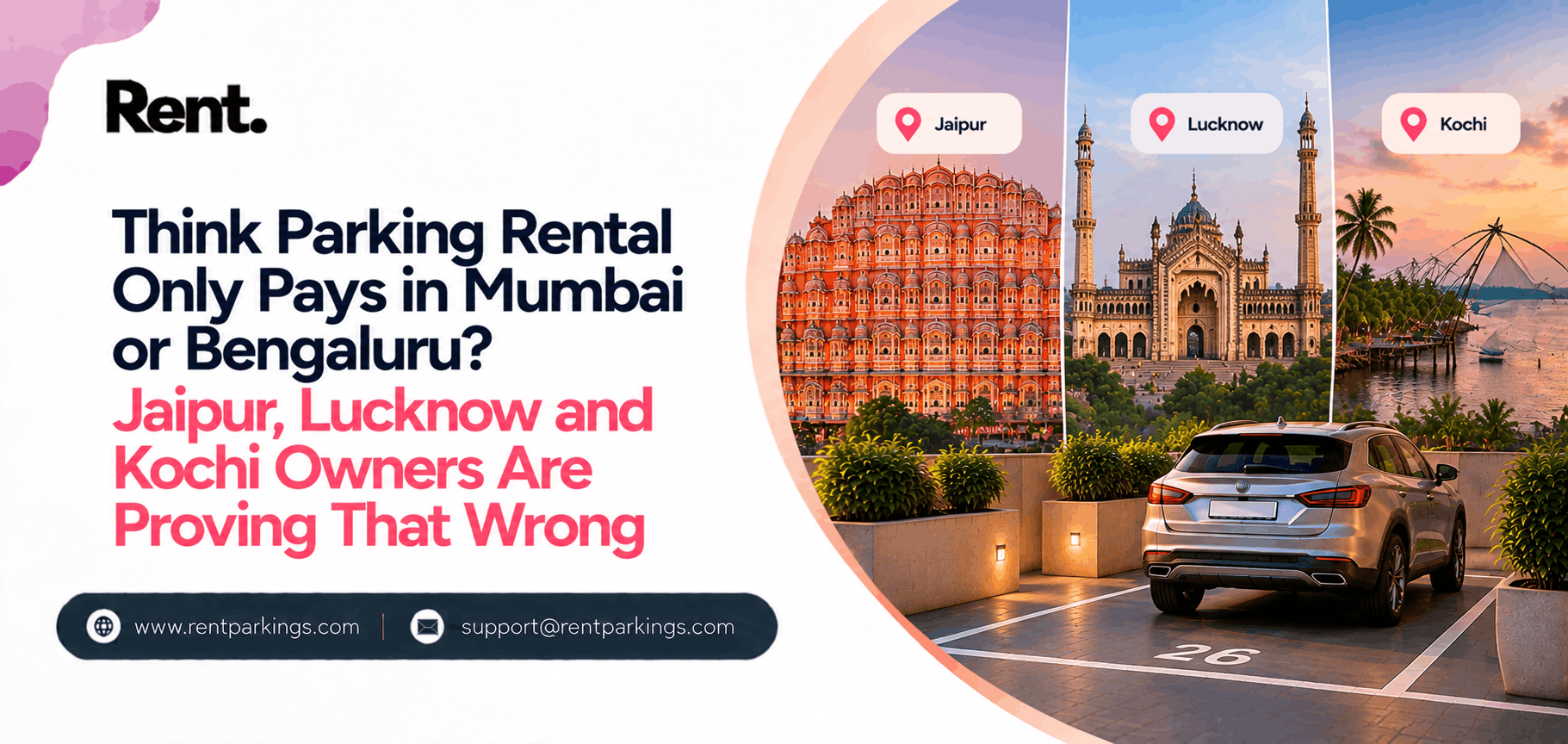
Think Parking Rental Only Pays in Mumbai or Bengaluru? Jaipur, Lucknow and Kochi Owners Are Proving That Wrong
Ask around in any property owners' WhatsApp group, and you'll hear some version of the same assumption. Parking rental is a big-city thing. A spare slot in a Mumbai tower or near a Bengaluru tech park, sure, somebody will pay for that. But a stilt parking space in Jaipur, or a driveway in Kochi? Surely nobody's lining up for that.
That assumption is wrong, and it's quietly costing property owners outside India's big four metros real monthly income. On RentParkings, the parking marketplace built specifically for Indian owners, hosts in cities well beyond Mumbai, Delhi, Bengaluru and Hyderabad are renting out driveways, basements, stilt spots and vacant plots to drivers who need somewhere dependable to leave a vehicle.
If you own unused parking space in a smaller Indian city and have written it off as "not worth trying," this is worth five minutes of your time.
Where the Metro-Only Myth Actually Came From
The assumption isn't baseless. Early parking marketplaces, ride apps, and most real estate commentary in India have always centred on the same handful of cities. Mumbai's housing shortage gets headlines. Bengaluru's traffic gets memes. Gurugram's commercial towers get analysts. Tier-2 and tier-3 cities rarely get mentioned in the same breath as "parking crisis," so owners there assume there isn't one.
But a parking crisis doesn't require a metro's population density. It just needs more vehicles arriving at a location than there are legal, safe places to put them. That condition shows up in a lot more Indian cities than the headlines suggest.
What's Actually Driving Demand in India's Smaller Cities
Walk through the reasons vehicles pile up outside city limits most people associate with "parking problems," and a pattern emerges fast.
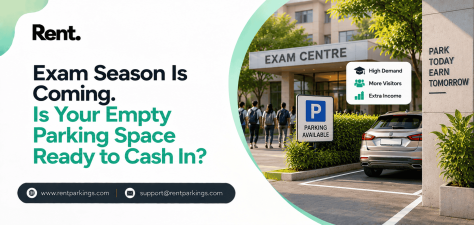
- Coaching and tuition hubs. Jaipur, Kota, and similar education-focused cities pull in thousands of students and their visiting families, all needing somewhere to leave a car or bike near the institute gates.
- Wholesale markets and mandis. Cities like Coimbatore, Madurai and Lucknow run sprawling wholesale trade zones where traders arrive before dawn in vehicles that need parking for hours, sometimes a full working day.
- Hill stations and weekend getaways. Towns that aren't metros by any definition, think Ooty, Lonavala, la or the roads leading into Kochi's backwaters, see weekend traffic that completely outstrips available parking.
- Railway junctions and transit hubs. Smaller-city stations often have worse formal parking than metro stations, because nobody built for the volume that eventually arrived.
- Growing residential compounds. As tier-2 cities add apartment towers faster than their roads and society parking bays can keep up, residents and visitors increasingly hunt for space outside the gate.
None of this requires a metro-sized population. It just requires more cars than sanctioned spots, which describes a surprising number of Indian towns in 2026.
Real Numbers Owners in Smaller Cities Are Reporting
Exact earnings vary by locality, but hosts we've spoken with outside the big four metros describe a fairly consistent pattern. A driveway or stilt spot near a coaching institute, wholesale market, or railway station in a tier-2 city typically rents for somewhere between ₹1,500 and ₹4,000 a month on a long-term basis, with hourly and daily rates running higher during peak seasons like exam months or festival weekends.
That's noticeably lower than headline metro numbers, which isn't surprising given lower overall rents in smaller cities. But it's also close to zero effort for the owner, since the space was already sitting empty and earning nothing. A few thousand rupees a month for doing nothing essentially with a slot you already own tends to look a lot better once you stop comparing it to Mumbai and start comparing it to the ₹0 it was making before.
A Closer Look: Jaipur, Lucknow, Kochi, Coimbatore and Madurai
Each of these cities has its own version of the same underlying gap between demand and legal parking supply.
Jaipur
Between its coaching centres, heritage-tourism footfall and a rapidly expanding IT and services sector around Mansarovar and Vaishali Nagar, Jaipur sees daily parking pressure that its older city layout simply wasn't built to absorb.
Lucknow
Government offices, medical colleges and a wholesale trade economy concentrated around Aminabad and Chowk mean Lucknow's older commercial lanes run out of legal parking well before midday most working days.
Kochi
Backwater tourism, a growing IT corridor in Infopark and Kakkanad, and port-related commercial traffic give Kochi a parking demand profile that rivals cities several times its size.
Coimbatore
A dense textile and engineering manufacturing base brings in supplier vehicles, delivery trucks, and staff two-wheelers in numbers the city's roads weren't planned around.
Madurai
Temple tourism alone creates seasonal parking spikes that rival anything you'd see outside a metro stadium on a match day, and that's before counting the city's own commercial and educational traffic.
If you own space in any of these cities, or somewhere with a similar mix of institutes, markets, tourism, or offices, the demand is very likely already there. What's usually missing isn't drivers willing to pay. It's a simple, trustworthy way for an owner and a driver to find each other.
Why a Smaller City Is Not a Smaller Opportunity on RentParkings
Here's the part that tends to surprise first-time hosts outside the metros: listing on RentParkings costs nothing, whether your property sits in Worli or a lane off Lucknow's Hazratganj. There's no listing fee, no subscription, no percentage carved out before you've even made a booking. You create a listing, you set the terms, and whatever a driver pays for your space is yours.
You also stay in complete control of how that space gets rented. Want to offer it purely by the hour for the coaching institute crowd down the road? That's your call. Prefer a flat monthly rate to a regular who parks there every weekday? You can set that too. Nothing about the platform locks you into a single pricing model, and you can change your rates whenever local demand shifts, say, during exam season or a big temple festival.
Our guide on how coaching and tuition hubs like Kota and Sikar run out of parking space twice a day walks through exactly how predictable this kind of localised demand can be, and how owners near an institute gate have used that predictability to set smarter hourly rates.
The same logic applies to trade zones. A piece on why India's wholesale markets run out of parking before the sun comes up breaks down how early-morning trader traffic creates a window of demand that most owners living nearby never think to monetise.
What If Your City Isn't "Famous" for a Parking Problem?
You don't need your city to have a reputation for parking chaos before listing makes sense. Plenty of demand exists in towns nobody writes articles about. If you're near a hill station or a weekend tourist route, for instance, we've documented why towns like Lonavala, Manali and Ooty run out of parking every weekend, and that same squeeze plays out in dozens of smaller getaway towns across India that never get the same headlines.
Railway stations tell a similar story. Our look at why travellers near Indian railway stations often overpay for a spot that should cost a fraction of the price applies just as much to a mid-sized junction town as it does to a metro terminus, arguably more, since smaller stations rarely have any organised parking at all.
And if none of these specific scenarios match your situation, that's fine too. A huge number of owners who've found steady income through the platform started with nothing more specific than an empty driveway and some curiosity, which is the exact starting point covered in turning an empty parking space into a genuine side income.
How to List Your Space in a Smaller City (It Takes About Ten Minutes)
The process doesn't change based on your pin code. Here's what it actually involves:
- Create a free RentParkings account using your phone number or email.
- Add a few photos of your space along with basic details: covered or open, car or two-wheeler, any access restrictions.
- Set your own price for hourly, daily, or monthly rental, whatever suits your locality's demand pattern.
- Publish the listing and start receiving booking requests from verified drivers in your area.
- Accept the bookings that work for you and get paid directly through UPI or net banking.
There's no inspection fee, no "premium tier" you need to pay for to appear in searches, and no obligation to keep the listing live if your plans change. You can pause it, edit it, or take it down whenever you want.
Frequently Asked Questions
1. Does parking rental actually work outside big metro cities like Mumbai or Bengaluru?
Yes. Demand depends on local conditions like coaching institutes, markets, tourism,m or offices outpacing available parking, not on a city's overall size. Many tier-2 cities have exactly this mismatch.
2. Which smaller Indian cities tend to have the strongest hidden parking demand?
Education hubs like Jaipur and Kota, wholesale trade centres like Lucknow and Coimbatore, tourism-heavy towns like Kochi and Madurai, and fast-growing residential pockets in cities like Noida and Gurugram all show strong, often underserved demand.
3. How much can an owner in a tier-2 city realistically expect to earn?
Reported ranges typically run from around ₹1,500 to ₹4,000 a month for a single space on a long-term basis, with hourly and seasonal rates often earning more during peak periods. Your exact number depends on location and how your space is used.
4. Is listing my parking space on RentParkings free, even outside the major metros?
Yes, completely. There's no listing fee, no subscription, and no charge to create or maintain your listing, regardless of which city or town you're in.
5. Do I have to accept every booking request that comes in?
No. You review each request and decide whether to accept it. Nothing is automatically confirmed without your approval.
6. Can I set my own price even if there aren't many comparable listings near me yet?
Yes. You choose your own hourly, daily, or monthly rate regardless of how many other listings exist nearby. Many first-movers in a locality set the early benchmark rather than following one.
7. What if my town doesn't have many RentParkings listings yet? Can I still list my space?
Absolutely. Every host starts as the first listing in their immediate area at some point. Being early often means less competition for the bookings that do come in.
8. Does demand in smaller cities come mostly from locals or from outside visitors?
It's usually a mix. Local demand often comes from commuters, students,s or traders, while visiting demand comes from tourists, exam candidates, wedding guests, or business travellers depending on the season.
9. Will my space earn less simply because overall rents are lower in my city?
Your earnings will likely be lower in absolute rupee terms than a prime Mumbai or Bengaluru listing, but the comparison that matters is against what the space earned before, which for most idle spots is nothing.
10. What's the easiest way to find out if my specific locality has real demand?
The simplest test is to list it. Creating a listing costs nothing and takes a few minutes, and you'll start seeing whether drivers in your area are searching for a spot like yours without any financial commitment upfront.
Your Parking Space Doesn't Need a Metro Pin Code to Earn
The idea that parking rental only makes sense in India's four or five biggest cities says more about where the conversation has historically happened than about where the demand actually sits. Coaching institutes in Jaipur, wholesale markets in Lucknow, backwater tourism in Kochi and temple crowds in Madurai all create the same basic mismatch that metro parking shortages do: more vehicles than legal places to put them.
If you've been assuming your city is too small, too quiet,t or too far from the headlines for anyone to pay for your parking space, the only way to actually find out is to list it and see. It costs nothing, you keep full control over pricing and terms, and the upside is turning a space that currently earns you nothing into one that earns you something every month. List your parking space for free on RentParkings and find out what your corner of India is actually worth.
Share This post
Search
Recent Post
Parking Space vs. Renting Out a Room to...
05 Oct, 2026
Your Mumbai Parking Space Is Worth More...
01 Oct, 2026
Hyderabad's Real Estate Boom Left One As...
30 Sep, 2026
What Your Parking Space in Chennai Could...
29 Sep, 2026
Your Plans Changed After Listing Your Pa...
28 Sep, 2026
Parking Space vs SIP: Which Idle Asset A...
25 Sep, 2026
What Your Parking Space in Pune Could Ac...
24 Sep, 2026
Exam Season Is Coming. Is Your Empty Par...
23 Sep, 2026